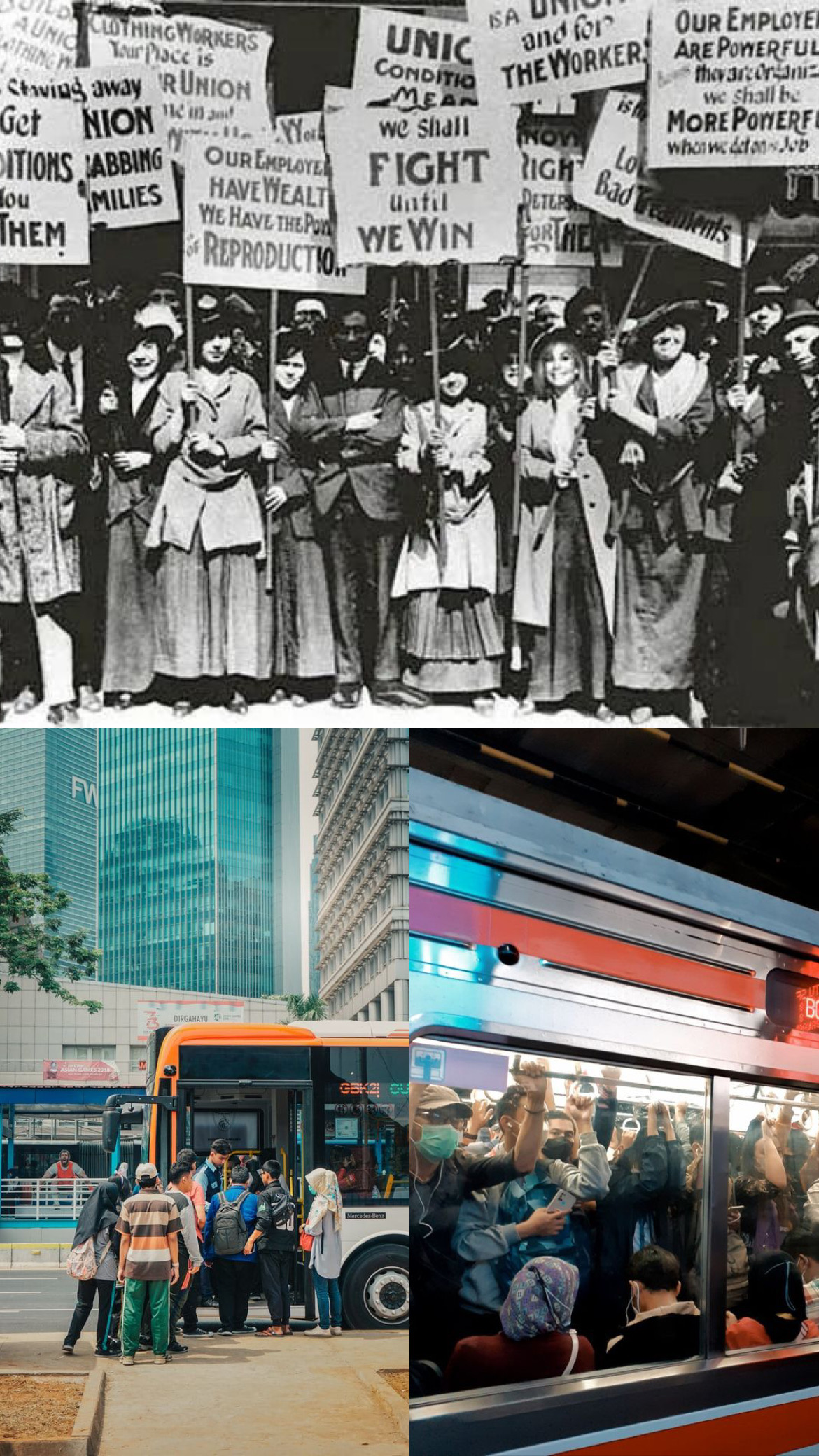
Long before May Day became a long weekend filled with parades and relaxation, it was a story written in the sweat, soot, and suffering of the 19th-century Industrial Revolution. During this era, the working class endured unimaginably harsh realities. Men, women, and even young children were subjected to grueling schedules, often toiling away in dark, poorly ventilated, and dangerous factories for ten to sixteen hours a day, six days a week. The massive iron machines of industry never stopped, and neither did the workers, who lacked even the most basic health, safety, or wage protections.
Driven to the breaking point by these brutal conditions, labor unions began to unite around a simple but radical demand that would eventually change the world: the eight-hour workday. A new rallying cry began to echo through the crowded streets and factory floors: "Eight hours for work, eight hours for rest, and eight hours for what we will." This movement reached a fever pitch in the United States, specifically in Chicago, which had rapidly become the bustling epicenter of the labor struggle. In 1884, a powerful federation of organized trades drew a line in the sand, declaring that starting on May 1, 1886, a legal day's work would officially be limited to eight hours.
When that fateful spring day of May 1, 1886, finally arrived, an estimated 300,000 to 500,000 workers across the United States bravely walked off their jobs in a massive, coordinated strike. In Chicago alone, 40,000 workers took to the streets, bringing the city's industrial heart to a grinding halt. Initially, the demonstrations were peaceful and triumphant, but the atmosphere quickly grew tense as employers and authorities pushed back.
The boiling point was reached on May 4, 1886. A rally was organized at Chicago's Haymarket Square to protest police violence that had occurred at a factory picket line the previous day. As law enforcement officers marched in to disperse the lingering crowd, an unidentified individual stepped out of the shadows and threw a dynamite bomb into the police ranks. The ensuing panic and indiscriminate gunfire resulted in the tragic deaths of at least seven police officers and several civilians, with dozens more left bleeding on the cobblestones. In the bitter, fearful aftermath, eight labor activists—many of whom weren't even present when the bomb was thrown—were convicted in a highly controversial trial. Four were hanged, forever etching their names into history as the Haymarket Martyrs.
The bloodshed and perceived injustice of the Haymarket Affair sent shockwaves around the globe, inadvertently galvanizing the international labor movement like never before. In 1889, a coalition of socialist groups and trade unions gathered in Paris for the first congress of the Second International. Deeply moved by the ultimate sacrifice of the workers in Chicago, the congress made a historic declaration: May 1st would forever be observed as an international day of strikes and demonstrations to demand the eight-hour workday. What had started as a localized strike in America suddenly blossomed into a worldwide symbol of workers' solidarity.
Ironically, the very nation where this fiery struggle ignited chose a different path. Fearing that an annual May 1st holiday would continually fuel radical movements and revive the violent, traumatic memories of the Haymarket bombing, U.S. President Grover Cleveland sought to distance his country from the date. To appease workers without validating the May Day radicals, the U.S. government instead designated the first Monday in September as its official Labor Day—a move subsequently followed by Canada.
Despite this geographic anomaly, May 1st cemented its place in history across the rest of the globe. Today, International Labour Day is a recognized public holiday in over eighty countries. It stands not merely as a day of rest, but as a powerful, enduring narrative of human rights. It serves as an annual reminder that the fundamental privileges modern workers enjoy today—such as weekends, minimum wages, paid leave, and safety standards—were never willingly handed down from the top, but were fiercely fought for, and won, by the unbreakable solidarity of the workers who came before us.